At Discovery Support Services, this area is considered as a specialized area of care. We believe that employees of Police services, Military, Fire Departments and Ambulatory/Paramedic services present with a workplace specific set of circumstances that affect their lives and therefore require experienced response that requires knowledge and education about their unique set of circumstances.
These first responders have to cope on a daily basis with the stress and the subsequent emotions that emanate from their job expectations that scurry them from crisis to crisis. They often have to deal and cope effectively with other peoples intense issues that involve incidents that are often violent, emotionally charged and hazardous, yet they must remain calm and in control. Their jobs demand personal characteristics and defence mechanisms that are beyond the scope of most occupations. The constant exposure to crisis can result in taking its toll in the forms of family dysfunction, separation and divorce, substance abuse, anger, personal loss of control and acting out behaviour and at the extreme mental illness and post traumatic stress disorder (PTSD).
As well they have to manage stress differently within a framework that has a unique set of working conditions such as lengthy 12 hour shifts on usually a rotating basis that involves the disruption of sleep patterns, reduced physical health 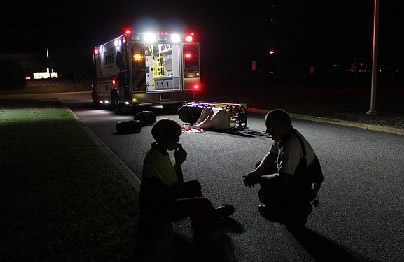 issues, and demanding schedules that over time can reduce the effectiveness of immune systems and the subsequent ability to manage their own physical and emotional health. Some of these issues escalate with age or can surface after retirement requiring reflection and support.
There is also a unique set of political pressure and public pressure put upon these individuals whose actions are scrutinized by their superiors and in some cases the public. They respond to thousands of incidents annually and they have to get everyone right or face the consequences of judgement and sometimes ridicule of their peers and superiors and the general public. Often their actions can result in Police Act charges or criminal charges and at times unjust judgement where they must endure long investigations while under suspension or on stress leave. Often they have difficulty reaching out and asking for support, viewing vulnerability as weakness. They are often exposed to society’s worse scenarios and these scenes often play out visually in their minds over and over again. One particular incident or the accumulated effect of attending numerous occurrences can over time reap havoc on their personal health.
These are the people who we call when things are out of control, when we need strength and protection and they try daily to respond to our call with professionalism and integrity. They deserve a specialized response when they are also in need.
At DSS we have a thorough understanding of the pressures that are unique to these professions. Our counsellors have had previous police experience and we have dissected and researched the variables that have an adverse affect on these occupations. Subsequently we have also developed a unique approach to offering support and have developed strategies to assist these individuals in coping with their dilemmas. We are well educated about the signs and symptoms of PTSD and the evidence based therapy that is proven to be effective. But we can also offer more because we have been there and have personal experience of the issues and the remedies that can help in getting these unique individuals back on their feet and doing what they do best - come to your rescue!
 We often work in coordination with client’s family members, family medical practitioner, legal counsel etc. in order to maintain a holistic approach to care. We also prepare full summary reports on progress and therapy if required for employers and legal counsel for court purposes or police act hearings.
We also apply a different approach to marital issues, couples counselling and custody and access issues as it relates to the unique circumstances of these professions. There are specific issues such as power imbalances that affect mediation and cooperative parenting goals that have to be addressed discreetly and uniquely to these professions due to their vulnerability to public scrutiny.